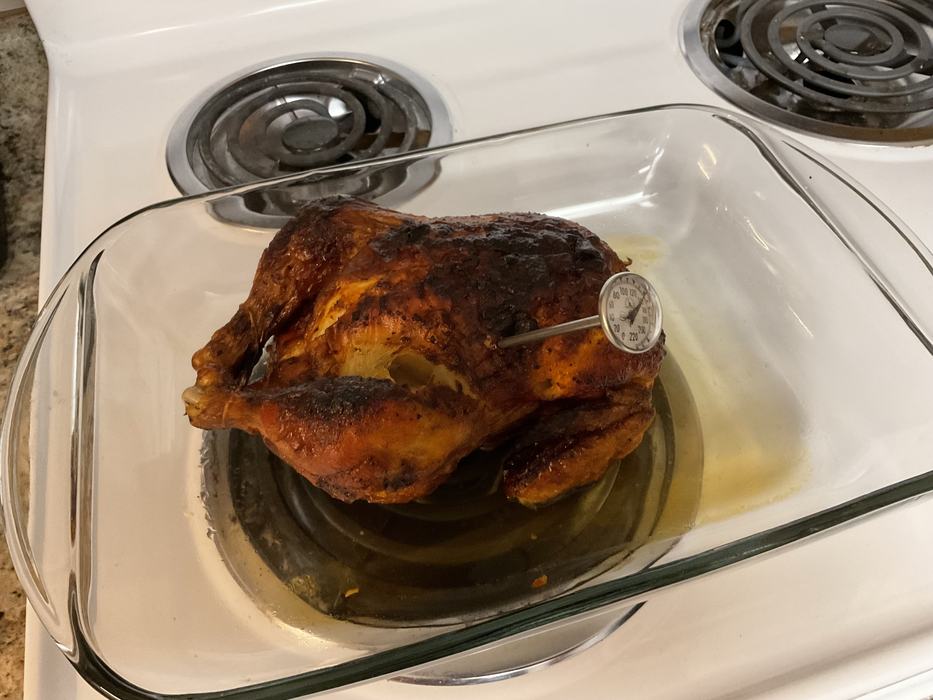
One of the most important steps in food safety is checking the temperature of our cooked foods before consuming them. Using the right thermometer ensures that we get accurate temperatures to determine when our food is cooked safely.
How do we know which cooking thermometer to buy?
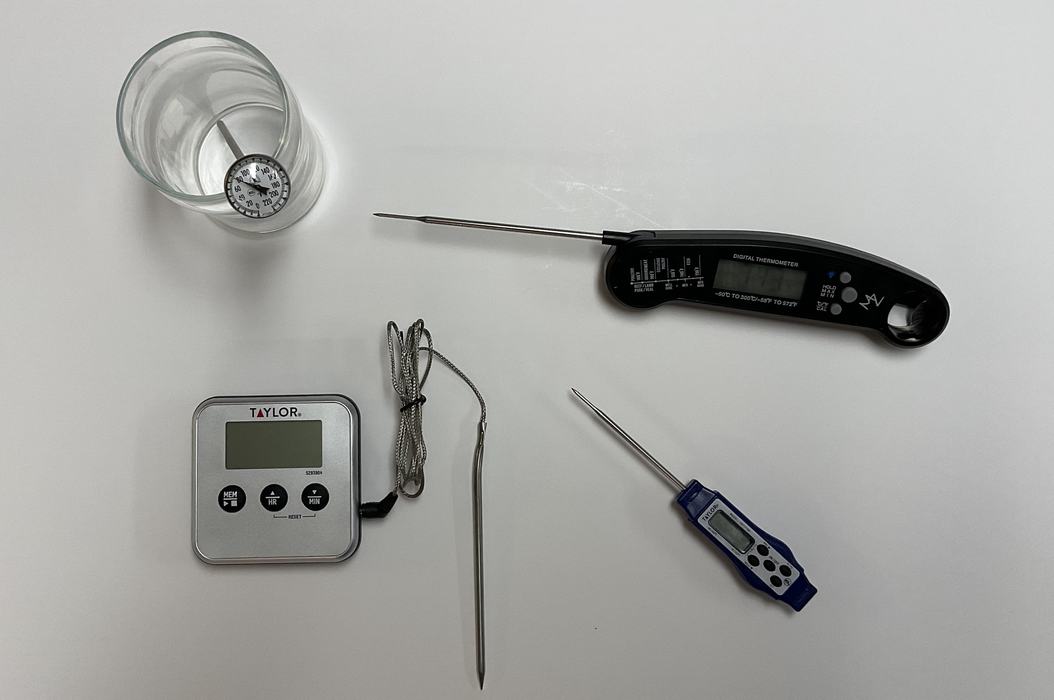
There are several types of cooking thermometers available for purchase. This article will go over four different types:
Oven Cord Thermometer
Thermistor
Thermocouple
Instant read, bi-metal thermometer
**Tip: Look for the National Sanitation Foundation (NSF) label on all to ensure your thermometers meet the highest quality standards for food safety.
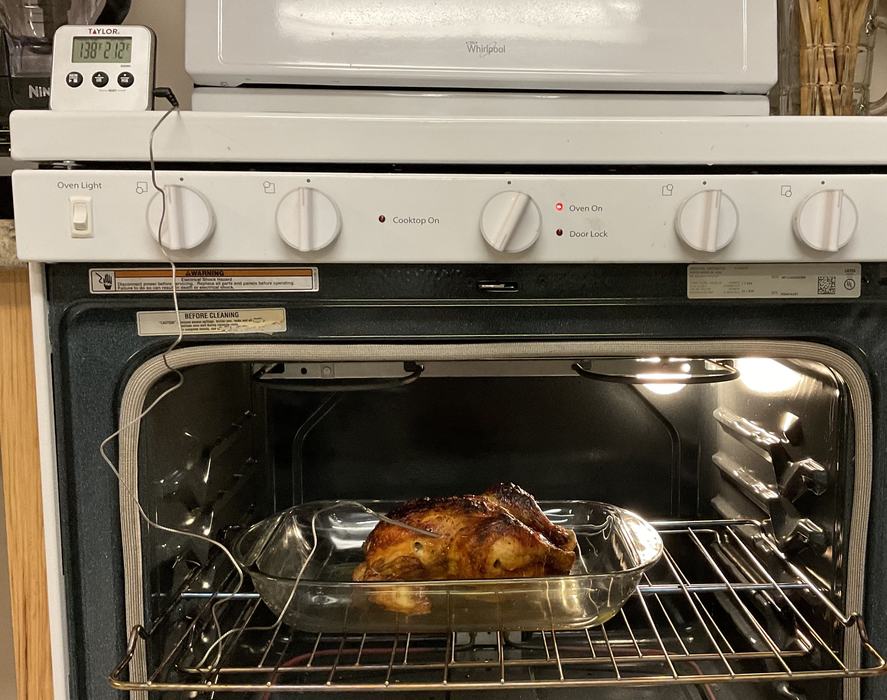
This digital thermometer is designed to be left inside the food while it is cooking to monitor the temperature. You can check the temperature of the food cooking in the oven without opening the oven door or food in a covered pot. Even though it is designed to be left inside the food while cooking, you can also use it outside of the oven for most foods. Make sure that the thermometer stays in the food for 10 seconds and is at least ½ inch deep in the food to get an accurate reading.
To know when the food is done, you will set the thermometer at the temperature you want the food to be at, and it will beep when the food reaches that temperature.
There are 3 parts to the thermometer:
Base/temperature reader- stays outside the oven to display the temperature
Probe (Thermistor-type thermometer) - goes into the joint of the meat
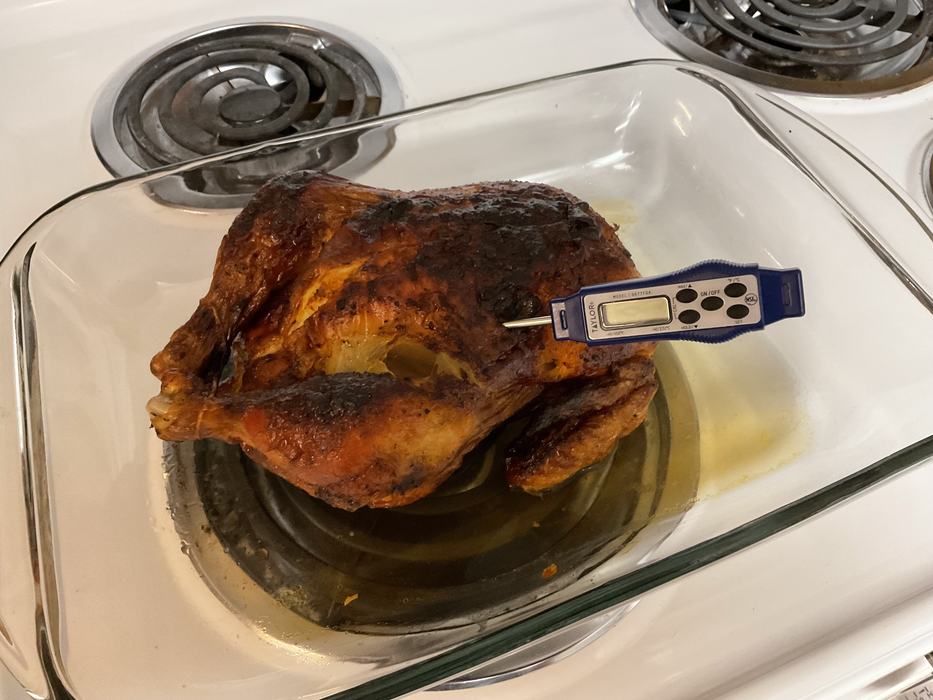
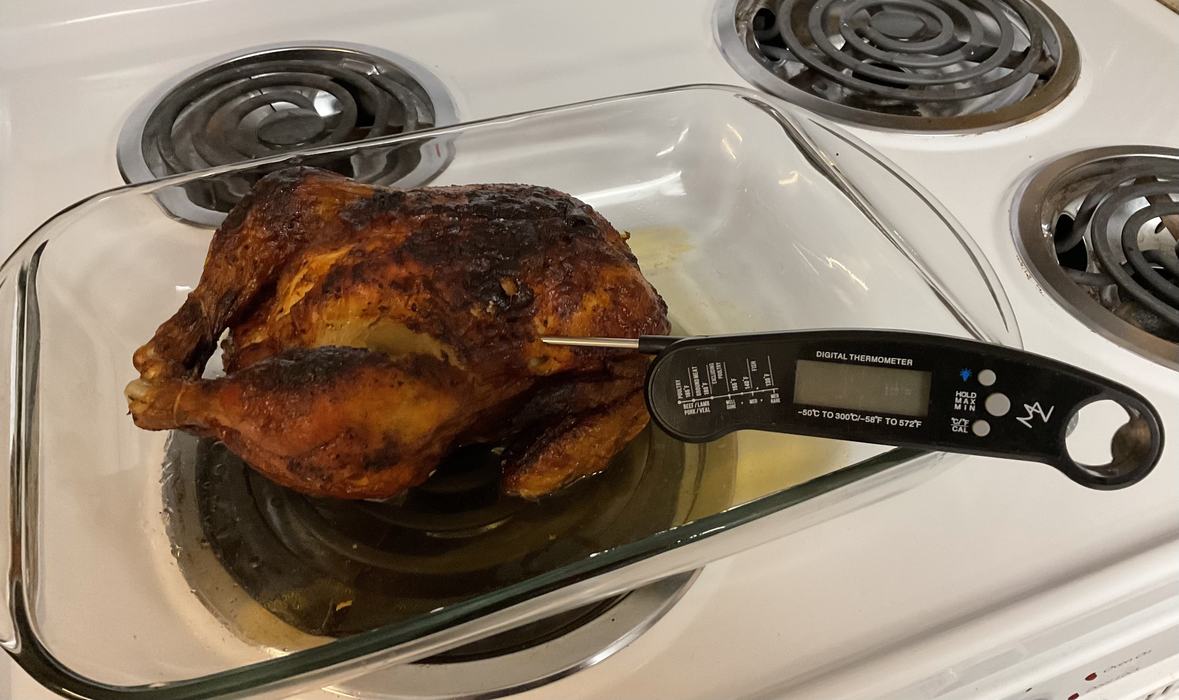
This thermometer is designed to measure the temperature of the food near the end of its cooking time to prevent overcooking-do not leave it in for the duration of its cooking. Place the tip of the probe at least ½ inch deep in the deepest part of the food for 10 seconds for an accurate reading. It has the ability to measure the temperature of both thin and thick foods. These thermometers are usually more expensive than others and can be found in restaurant supply stores.
** Check the thermometer’s instructions for whether it can be calibrated or not.
This thermometer is designed to measure the temperature of the food near the end of its cooking time to prevent overcooking-do not leave it in for the duration of its cooking. Place the tip of the probe ¼ inch into the food for only 2-5 seconds. It has the ability to measure the temperature of both thin and thick foods. These thermometers are usually more expensive than others and can be found in restaurant supply stores.
**These thermometers can be calibrated with one button.
This thermometer is designed to measure the temperature of the food near the end of its cooking time to prevent overcooking-do not leave it in for the duration of its cooking. Place the probe 2-2 ½ inches into the deepest part of the food for 15-20 seconds to get an accurate reading. It can measure most foods-roasts, casseroles, soups, etc. It can measure the temperature of both thick and thin foods, but when measuring thin foods, make sure it is inserted sideways, or it will be inaccurate. These thermometers are more affordable and readily available in store.
**Most of these thermometers can be calibrated, but some cannot- check the instructions with the thermometer to find out.
For tips on calibrating your thermometer, check out this article from