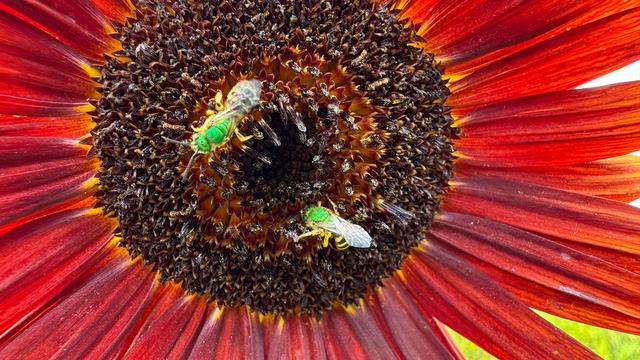
Over 85% of the world’s plants depend upon pollinators to move their pollen around. Plants that don’t require pollinators still benefit from the exchange of pollen, resulting in better seed viability, more complete fertilization, and improved genetic transfer. These ecosystem services bolster the resilience of our natural and cultivated landscapes.
Honeybees and Monarch butterflies are arguably the most recognizable pollinator species. Beetles, bats, birds, flies, wasps, and even mice also function as pollinators. But it is our native bees that are true workhorses in the environment. Because they are often solitary, and more difficult to distinguish from one another, they are often overlooked.
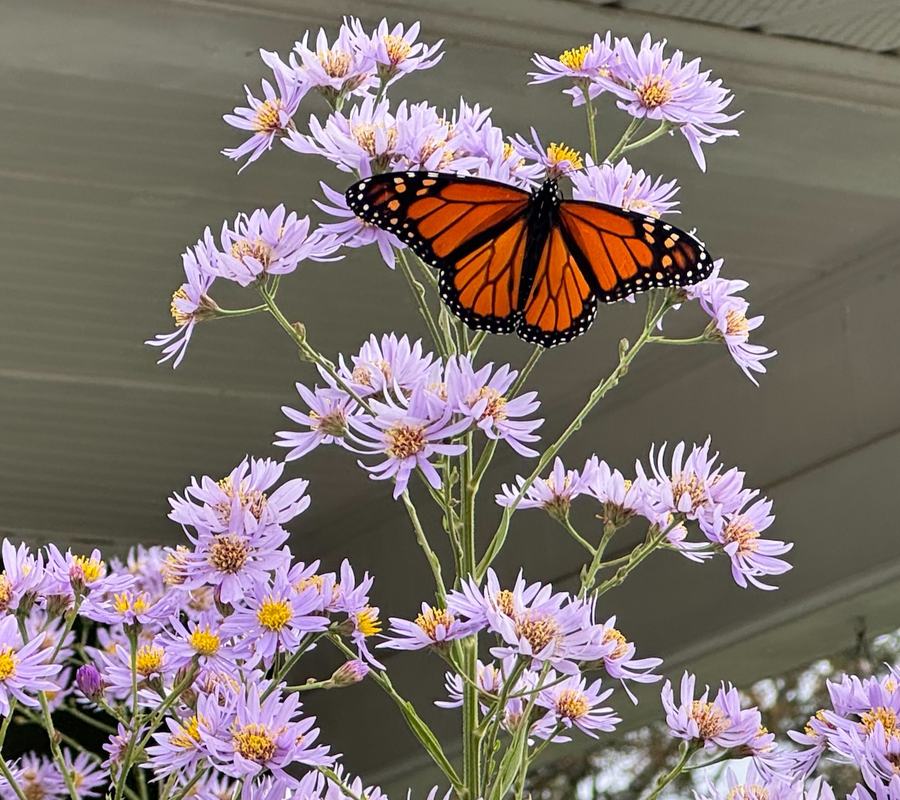
The monarch butterfly is easily recognizable due to it's unique color pattern, large size, and educational efforts to highlight it's endangered species status.
There are 4000 native bee species in North America and 528 recorded species in North Carolina. Seventy percent of native bees nest in the ground and in some cases form aggregations of nesting sites. In the spring, people often notice ground nesting bees by their activity in bare soil areas, where they can more easily establish nests. Though multiple bees may be observed in this setting, there is usually no cause for alarm. Native bees behave quite differently than species that humans associate with stings and defensive behavior, such as bald-faced hornets and yellowjackets.
The other 30% of native bees are considered wood nesters, relying on hollow woody stems or other natural cavities as their nesting site. Plants like elderberries, joe pye weed, dogwoods, brambles and sumacs provide good homes for these bee species. Bee hotels are a popular trend to attract these pollinators into your garden, though maintenance of these structures is important to maintain healthy nesting sites.
Some pollinators are very cosmopolitan in their diet, feeding on a wide range of plants for pollen and nectar. Think about the bumblebee: how many different types of plants have you seen a bumblebee forage? In your garden they’ll move from your tomatoes to your black-eyed susans, over to your asters, and then onto the thistle blooming next to the road. Pollinators like these, that utilize many types of plants to maintain their diet, are called generalist pollinators.
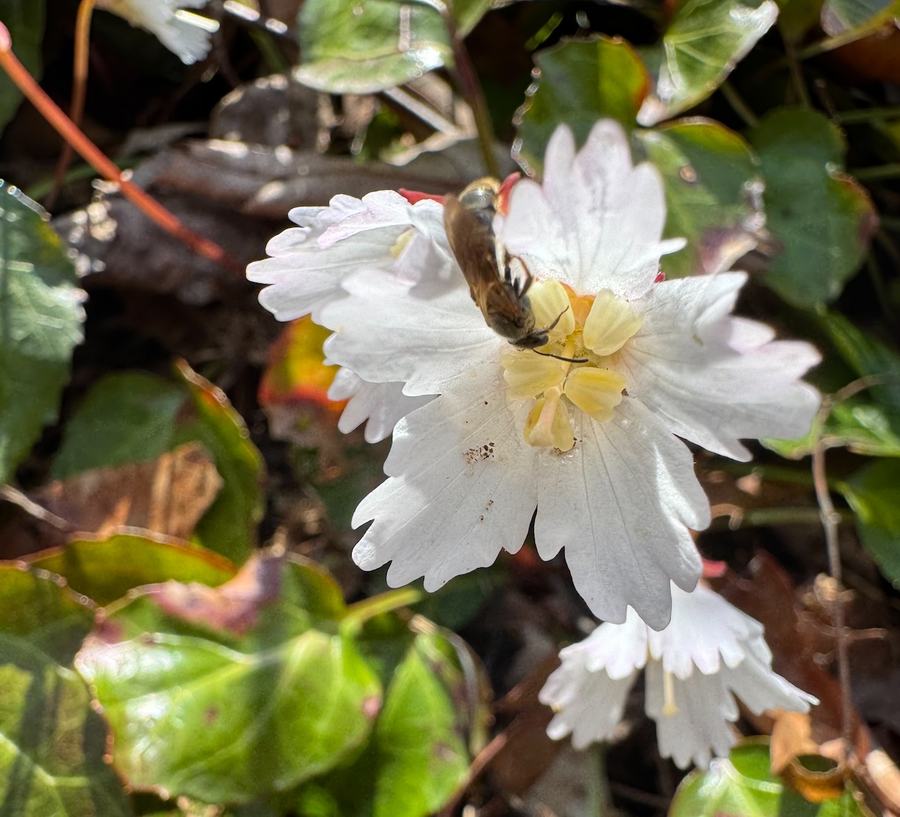
If a particular wildflower catches your attention, take a closer look to see if a nearby pollinator is at work. Here, a small native bee is about to feed on the nectar or pollen on this Oconee Bell flower.
On the other side of the spectrum from a generalist pollinator is a specialist. These are bees that are primarily dependent upon one or two plant species, or genus of plants, for their survival. If you’ve even grown squash in your garden, you’ve supported one type of specialist bee – the Squash Bee, which is a ground nesting bee. Other specialist bees are the Sunflower Bee (Diadasia enavata) and the Southeastern Blueberry Bee (Habropoda laboriosa).
There are many ways to become more familiar with native bee species. If you have areas with exposed, undisturbed soil, keep a look out for distinctive small holes and low-flying insects. These can indicate ground nesting native bees. Cultivating a variety of plants that support native bees will increase observation potential. Native bunchgrasses create good nesting sites under their arched leaves and pithy or hollow stems attract wood nesting bees. Having flowering plants from spring through fall will provide food sources for pollinators, while a broad mixture of flowering plants ensures pollinators have access to a diverse diet.
NC Cooperative Extension has many resources to learn more about pollinators:
You can also learn more about creating pollinator habitats through the Buncombe County Extension Master Gardener's Gardening in the Mountains educational series on May 21, 2026 - learn more here.