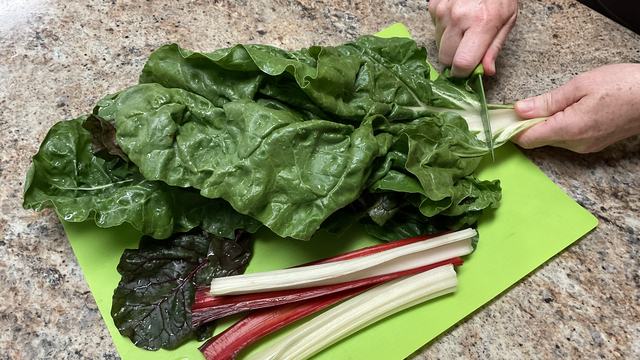
Swiss Chard is a leafy green closely related to the beet plant. It is easy to recognize by its broad leaves and colorful stems of white, yellow, red, orange or purple. Its young leaves are tender and can be eaten raw in salads or used similarly to spinach in a variety of recipes. Older leaves are better cooked and can be added to soups, stir fry, sauces, or even stuffed.
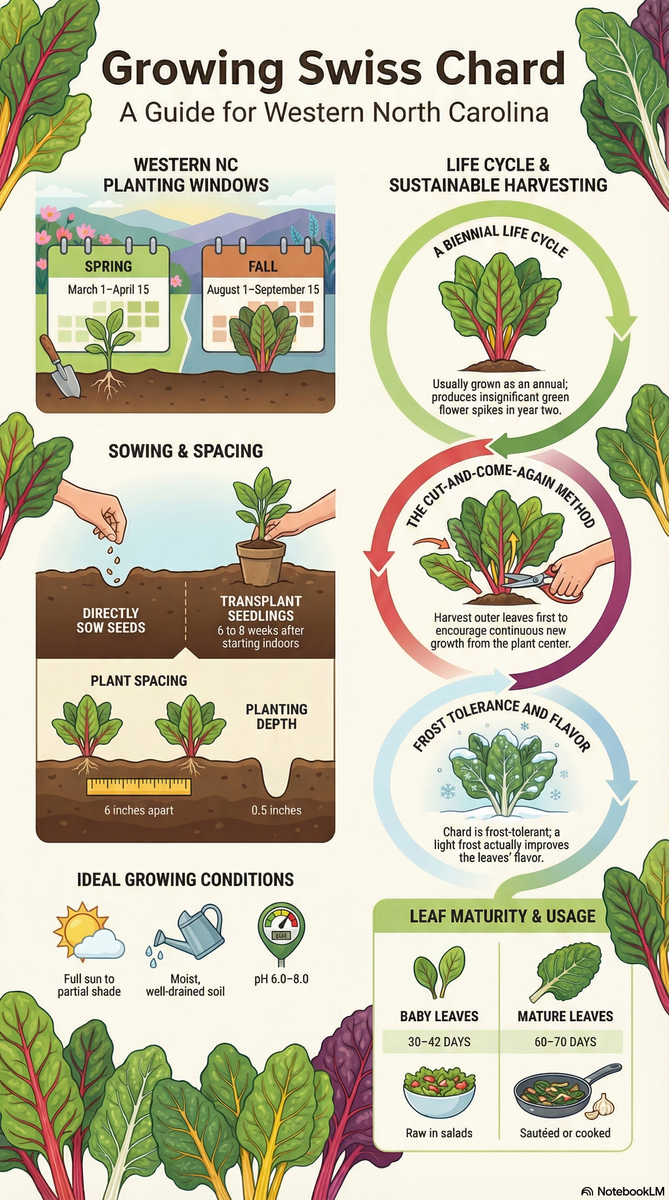
In western North Carolina, Swiss chard is typically planted in early spring, either through directly sowing the seeds into the ground, or by starting seeds indoors and transplanting at a later time. It is ready to harvest in May and June. It can be grown in containers, borders, or in vegetable gardens. A second planting of Swiss chard can be sown in late summer for a fall harvest. Chard can tolerate a light frost and is a cool-season green, growing well in both cool and warm environments. Plant chard half an inch deep in a well-drained, sunny area. Once seedlings are established, thin plantings 6 inches apart.