It is the time of year where all across WNC, the reds, yellows, pinks, and purple leaves put on a show that reminds us all that the fall season is upon us. The science behind the changing color of the leaves explains why we see this phenomenon every year which we all enjoy!
Days getting shorter, and environmental factors including decreased nightly temperatures are the main drivers of this change in many of our deciduous species of trees. Chlorophyll, the pigment in plants that give leaves their green color, absorbs the sunlight’s rays converting this energy into sugars that feed the growth and metabolic processes within a plant in a process called photosynthesis.
The phytochrome in plant leaves act as light sensors. These receptors can detect the shortening of day length as we get into the fall of the year as night length increases, therefore triggering a slowing in production of chlorophyll. This degradation and breakdown of chlorophyll production gradually unmasks pigments that were always present in the leaf including xanthophyll, carotene, and anthocyanins. These pigments give leaves their brilliant yellow, orange, and red/purple fall color, while also acting as photo protectors against UV light spectrum not absorbed by chlorophyll within the leaf tissue.
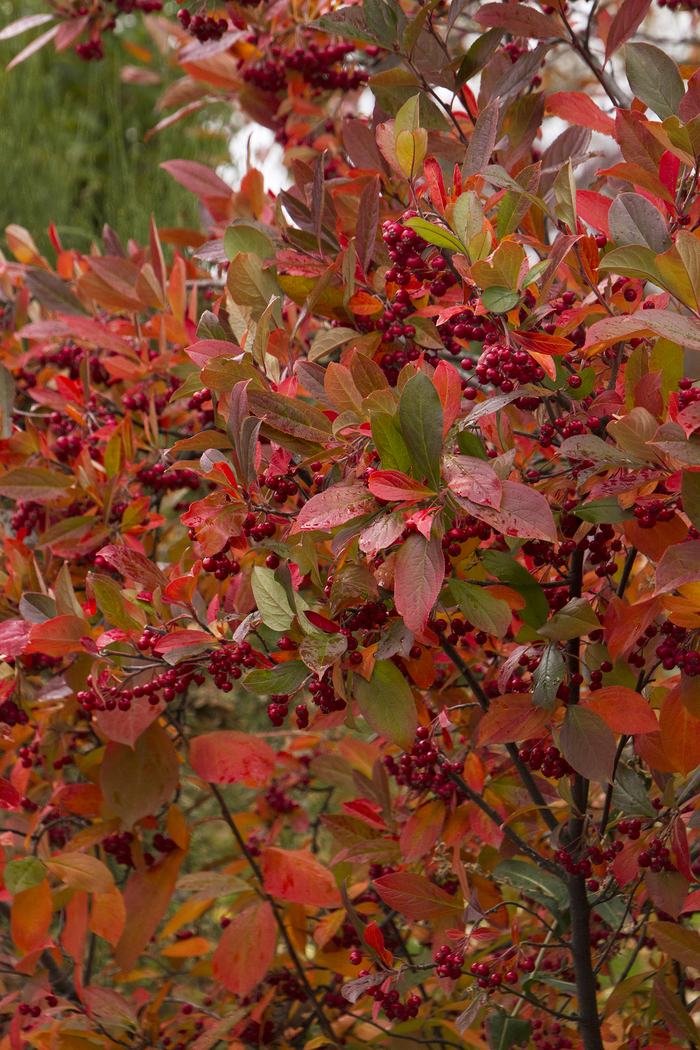
Some species have higher levels of specific pigments which give them characteristic color this time of year. Species such as beech, and birch contain higher levels of xanthophyll which lead to a production in yellow fall color while species like sourwood showcase anthocyanins which increase production at the beginning of all that lead to brilliant red hues. So the question may be asked, why is fall color better in certain years than others? Well, other environmental conditions such as rainfall, timing of our fall frosts/freezes, and elevation can all influence fall color from year to year. The ideal conditions for fall color is adequate moisture throughout the summer (drought tends to cause leaves to drop prematurely), with crisp sunny days followed by cool, but not freezing, nights.
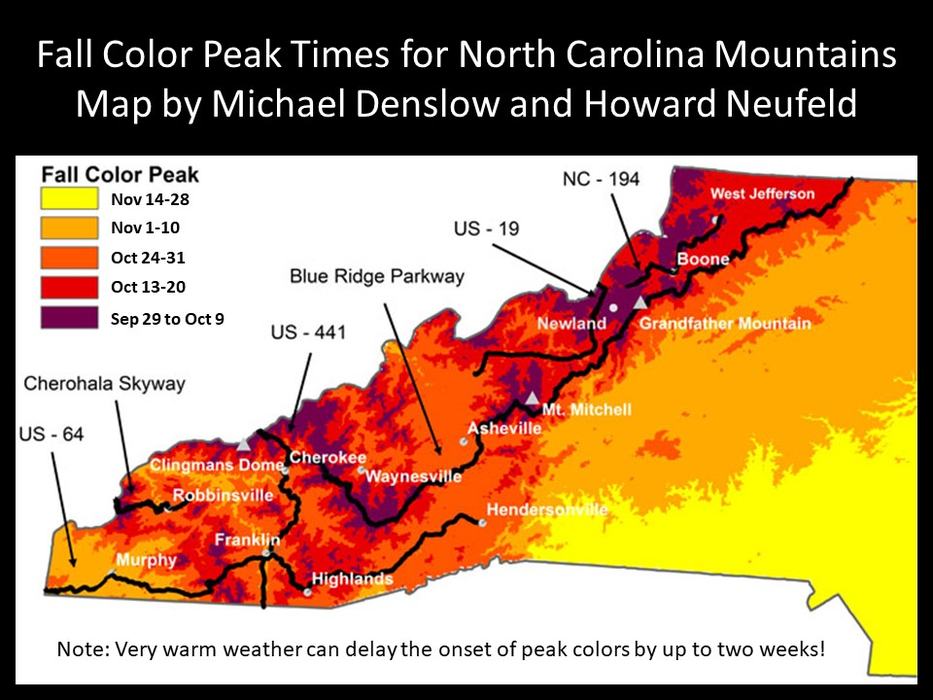
This fall, you can see the fall color forecast for our area based on elevation and latitude using the map created by Howard Neufeld and Michael Denslow at Appalachian State University: