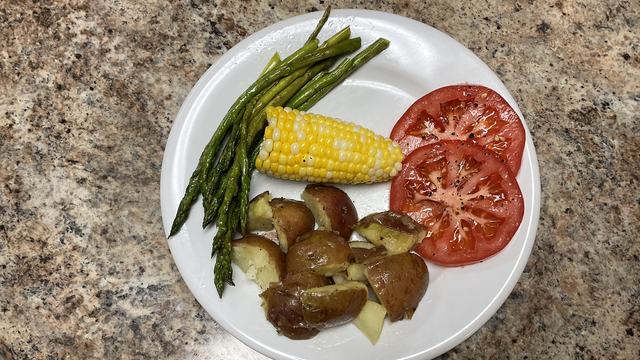
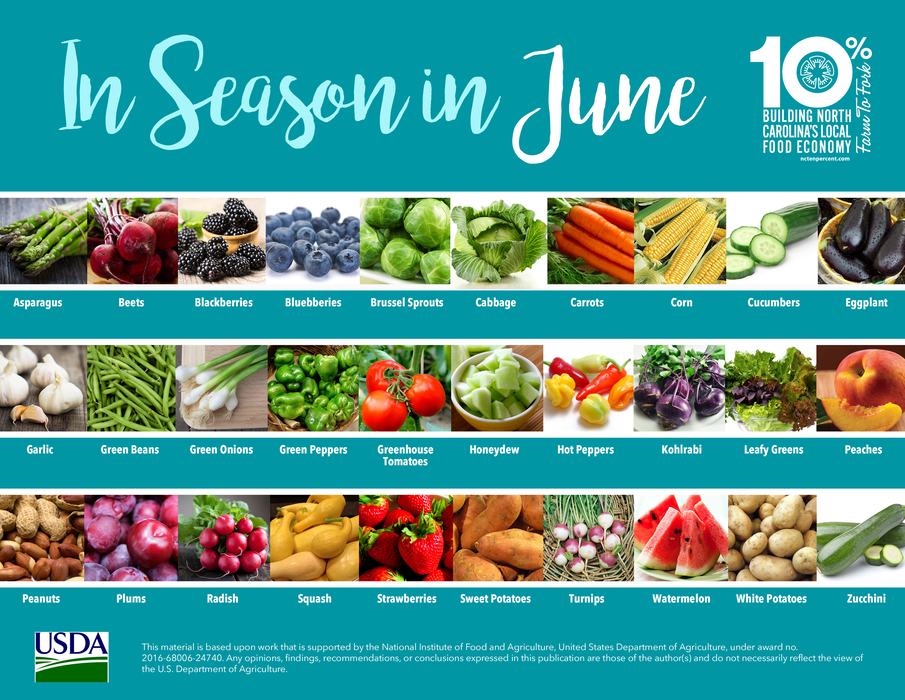
The month of June brings a bounty of spring crops into harvest. And though the growing season is just now getting under way in Western North Carolina, asparagus, sweet corn, greenhouse tomatoes, and potatoes are all in-season vegetables that can be found at local farmers' markets and grocery stores.
Serve this as a hearty, plant-forward main dish, or alongside a lean meat such as grilled chicken or salmon.
Fresh vegetables are easy to prepare in a number of ways including roasting, boiling, sautéing, steaming and air frying. Each method works better for different types of vegetables as indicated in the chart below.
We prepared this vegetable plate at the Buncombe County Cooperative Extension office on May 7, 2026 after purchasing all of the ingredients from our local grocery store. We made 4 plates, equaling $ 3.02 per plate.
When selecting asparagus, look for firm stalks with no strong odor. Store in your refrigerator's crisper drawer and use within 2-3 days.
Greenhouse tomatoes should feel heavy with juice and have a little "give" when pressed. Keep these on the counter–not in the refrigerator–to preserve flavor and texture.
Avoid potatoes with eyes or soft spots. Also look for a greenish hue on the skin of the potato. Known as solanine, this greenish hue is a result of chlorophyll, caused by too much light, either in the field or under grocery store lights. While chlorophyll is harmless, solanine can cause mild upset stomach and has a bitter taste. Store potatoes in a cool, dry, dark area until ready for use.
Corn is best when fresh and in season. Its natural sugars quickly turn to starch after harvesting. When shopping, look for ears wrapped tightly in bright green, moist husks with sticky, brown silks at the top. Keep your corn in its husk, wrapped in a damp paper towel inside a plastic bag in your refrigerator's crisper drawer until ready for use.