Whether you are a young person moving into your first apartment or college dorm or a seasoned home cook looking to simplify your kitchen, the start of the new year is an excellent time to take inventory of your kitchen's basic needs.
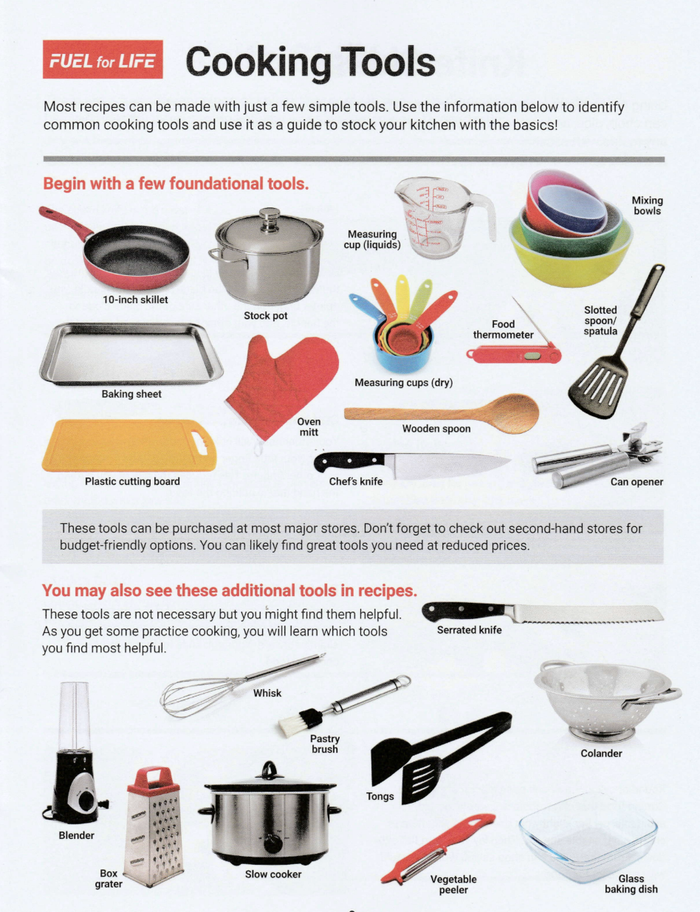
No matter the size of the kitchen there are a few items that prove to be essential for any home cook. A stock pot, 10-inch skillet, baking sheet, cutting boards, measuring spoons, utensils (wooden or silicone can be used on any type of pan), and a quality chef’s knife will allow anyone to prepare a delicious, healthy, home cooked meal on any type of budget.
Additional tools, such as a serrated knife, pastry brush, and measuring cups are necessary for baking and bread making.
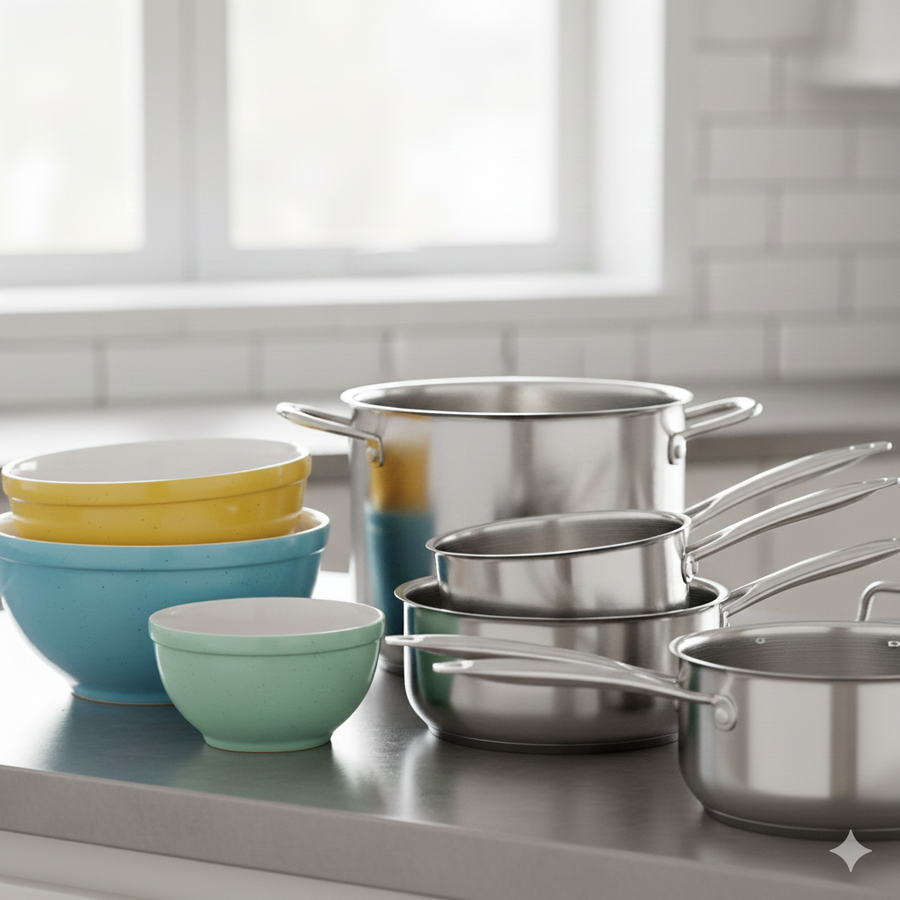
Mixing bowls come in a variety of styles from vintage to modern, colored or clear. Maximize your investment in these by using them to store fresh fruits, vegetables, and healthy snacks for in between meals.
Don’t Be Afraid to Experiment
When setting up your first kitchen and learning to cook, using recipes can feel a bit intimidating. Don’t be afraid to experiment and adjust according to your own taste preferences, such as swapping out black beans for kidney beans in chili. Most recipes allow a little “wiggle room". The goal when starting out is to learn the basics so you do not feel overwhelmed in the kitchen. Healthy, tasty home cooking does not have to be expensive. Recipes are abundant and can be found for any style of cooking. Good places to look include your local library and used book stores. Some grocery stores and websites offer free recipes for a variety of dishes.
Time Saving Tools
A slow cooker is an excellent device for any cook to have in the kitchen. Many cuts of meat, soups, stews, and beans can be easily and safely cooked over a long period of time. Slow cookers are excellent for people on the go. Simply add the ingredients, follow the recipe, set the timer to the recommended setting, and go about your day. Another useful device is the multi-cooker. Multi-cookers have a number of functions and can serve as a pressure cooker, slow cooker, rice cooker, and steamer, among others. Saving time and physical space, today’s multi-cookers are very safe to use even when functioning as a pressure cooker. Cook healthy and economical ingredients such as dried beans or whole grains in a fraction of the time.
Pans and Pantry Essentials
Pots and pans are a must-have for any home cook. With a multitude of uses from cooking pasta to searing meats to simmering hearty sauces, these tools are available in a variety of materials. Cast iron, stainless steel, and chemically coated nonstick each have their own pros and cons in terms of care and use. Cast iron requires seasoning and upkeep, stainless steel may be more of an investment than your preferred budget, and chemically coated non-stick may require more delicate handling to avoid scratching the coating. The most versatile pan to have is a 10-inch skillet, which can be used for a number of purposes from sauteing vegetables, toasting sandwiches and bread, and rewarming leftovers without the use of a microwave.If new to cooking, or wanting to re-evaluate your own cooking habits, it is important to have a well stocked pantry. No-salt-added canned vegetables and beans, canned fruit in 100% fruit juice, and a spice collection of salt, pepper, garlic and onion granules, and an Italian herb blend will allow you to create many healthy meals at home, reducing your food budget and saving you money.
Learn More with EFNEP
As your new kitchen journey continues, study advice on food safety and menu planning, pay attention to sales and discounts at your local grocery store, and invite your friends and family to cook with you. Cooking can be a great social and family activity, bringing everyone together to share a home cooked meal on any budget. The EFNEP (Expanded Food and Nutrition Education Program) offered through N.C. Cooperative Extension, offers a variety of nutritional education classes helping families with children in the home cook healthy meals, become more active, and save money on food costs. Classes are available in Buncombe County through Cooperative Extension’s EFNEP Educator, Amanda Bremseth. For more information, or to see if your household or organization qualifies, contact our office at 828-255-5522.