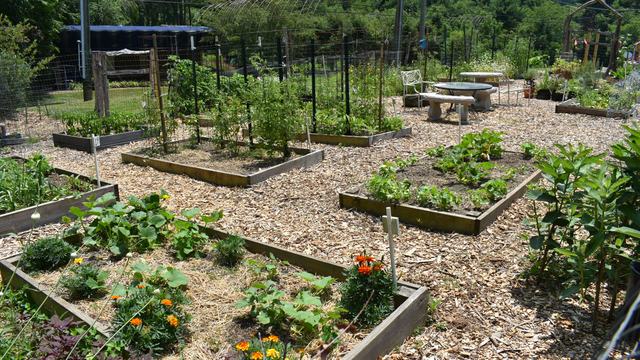
The 2026 Vegetable Garden planted by the Buncombe County Cooperative Extension Master Gardener℠ Volunteers is showcasing innovative, space saving and disease resistant growing methods this season.
Consisting of 20 planting beds, many of them raised beds, with a few in ground beds, the garden offers visitors a chance to see various gardening techniques and a variety of vegetables, herbs, and flowers planted this season.
Living Mulch
One focus of the garden this year is the use of cover crops as living mulch. One bed of the garden was planted with hairy vetch in October, 2025. A legume related to peas and clover, hairy vetch can be used as a cover crop, enriching the soil with nitrogen while suppressing weeds. The physical barrier prevents fungus and bacteria from splashing onto the leaves and infecting the tomato plants.
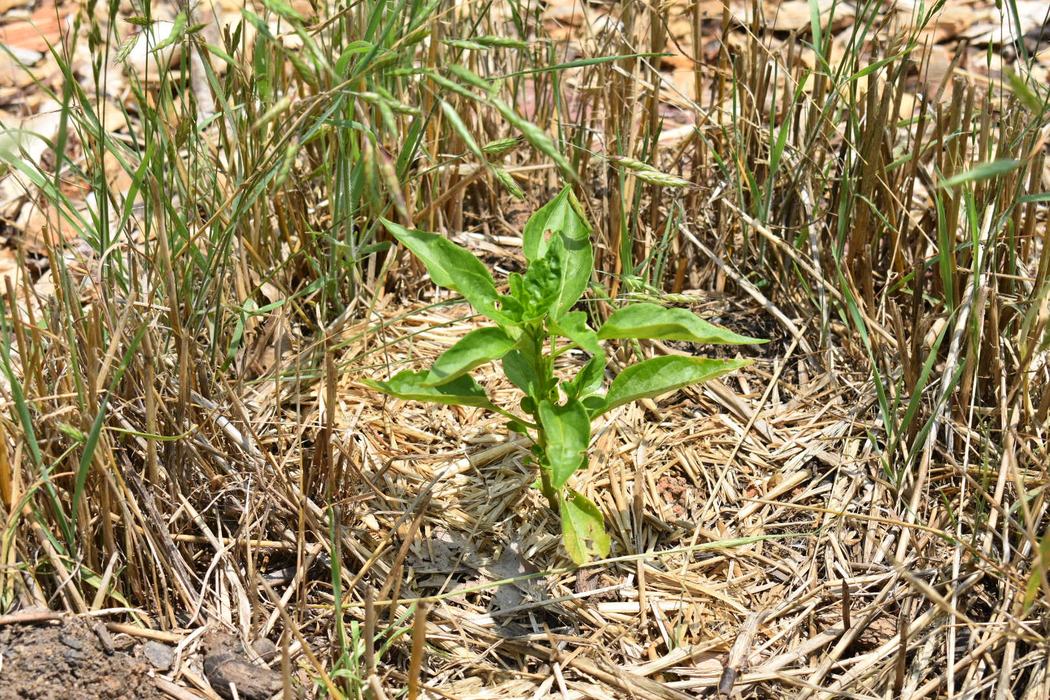
A small section of the garden features shishito peppers planted in winter rye. Winter rye is a cool season grass, meaning it prefers to grow in the cooler autumn and winter months. Typically planted from the second half of August through the end of September, it begins to grow as summer crops are coming to completion. It will grow through winter, slowly, but then grow quicker as spring arrives and temperatures increase. When used as a cover crop, winter rye is cut about three weeks prior to planting warm season crops such as tomatoes, peppers, and eggplant. The cuttings decompose, adding rich nutrients to the planting area. Leaving the base of the winter rye intact and planting garden plants within it, allows it to act as a living mulch, suppressing weeds while retaining soil moisture and preventing erosion.
Shishito pepper plant growing in winter rye cover crop.
Tomato Plants in Straw Bales
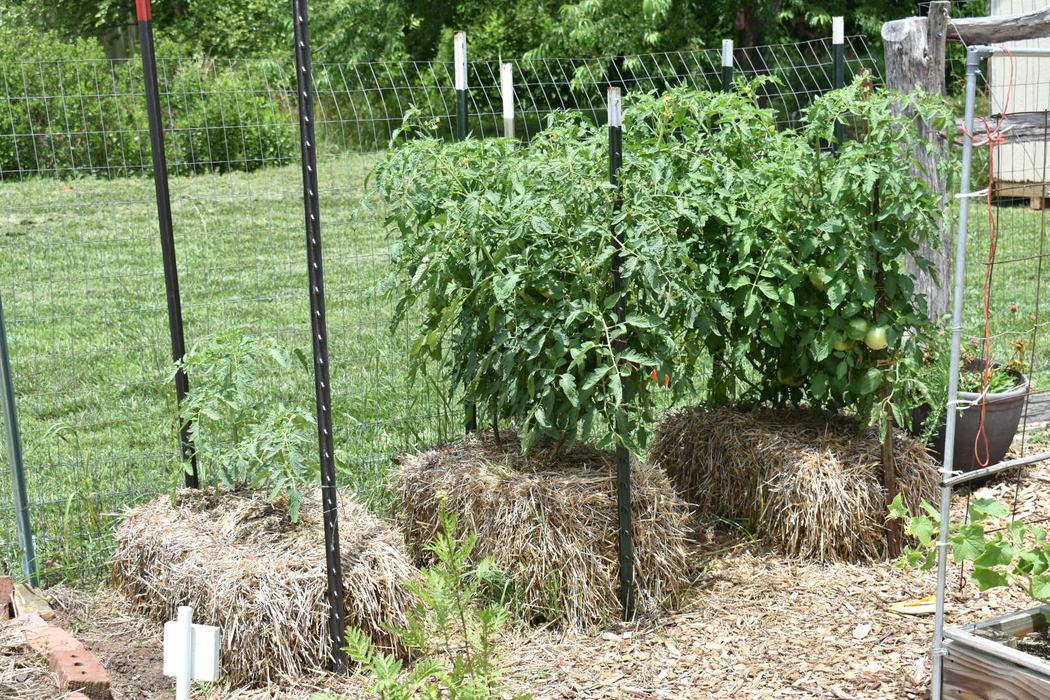
Another feature of this year’s garden is tomato vines planted in straw bales – a unique gardening method that is especially helpful if you have less than ideal soil or a limited growing space. Similar to the use of cover crops, this method is effective in disease pressure reduction because the vines are not growing close to the ground.
Care must be taken to prepare the straw bales for planting. First, ensure you use straw bales and not hay bales. Straw is the hollow, leftover stalks of grain crops such as wheat and oats. It is relatively sterile and contains very few seeds. Hay is cut dried grass and clover used for animal feed. It contains numerous seeds that will grow with enough moisture. The straw bale must be conditioned prior to planting. Visit our NC State Extension Master Gardener℠ Volunteers of Buncombe County website for instructions and a video on straw bale and other gardening methods.
Tomato plants growing in bales of straw in the demonstration Vegetable Garden.
Potato Towers
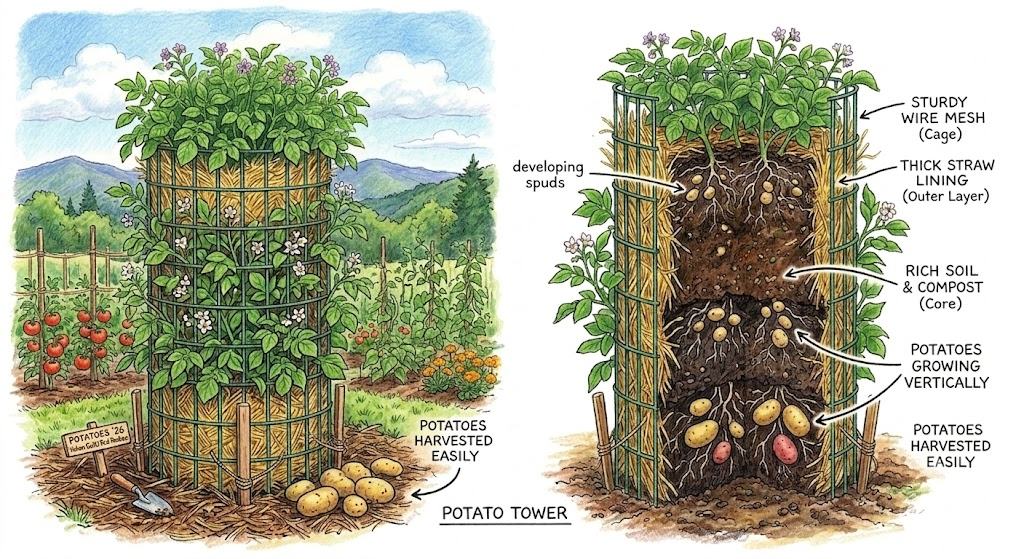
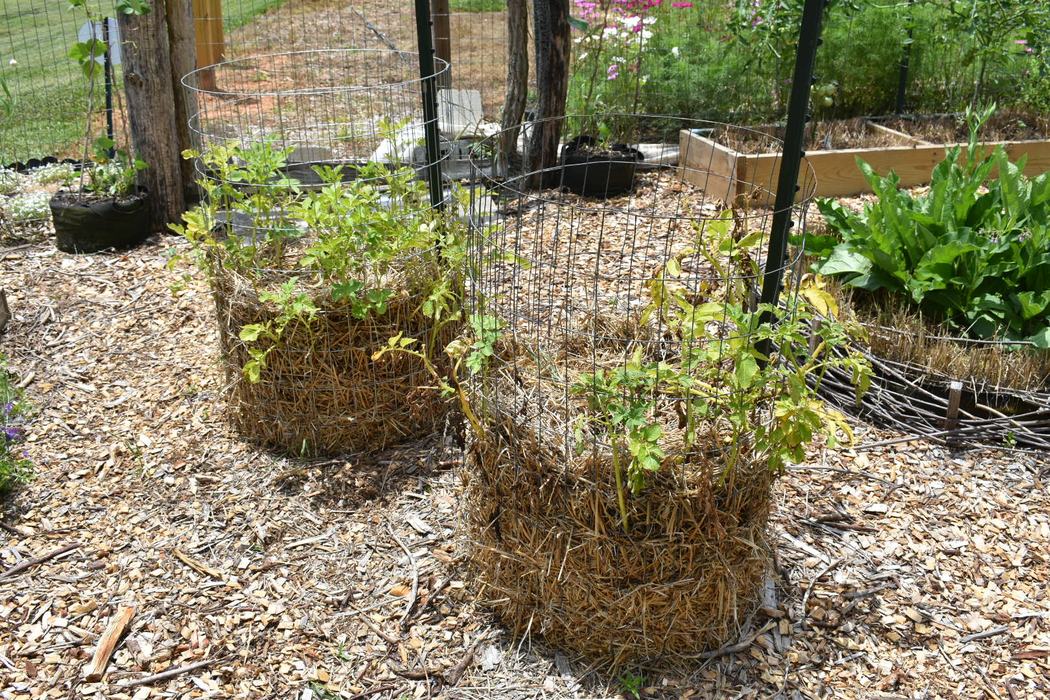
One vertical gardening technique showcased in this year’s garden is potato towers. If you’ve always wanted to grow potatoes but never had the space, this method may work well for you. Wire mesh fencing is used to create a tower, or vertical cage. Once it is secured to the ground to prevent tipping, straw or mulch lines the interior to retain moisture and to help hold soil in place within the tower. Seed potatoes are planted within the soil, covered, then another layer of straw is added and the process repeats.
The vegetable garden is one of nine featured spaces in The Learning Garden at the NC Cooperative Extension Buncombe County Center. We are located at 49 Mount Carmel Road, Asheville, 28806 and are open Monday through Friday from 8am to 5pm. Our Master Gardener volunteers are available for questions and advice on Mondays, Tuesdays, and Thursdays from 10am to 2pm. For more information, videos, and to see upcoming workshops, visit their website at: