“How safe are we from wildfire?”
It's a good question to ask when drying winds, low humidity and the amount of “fuel” or wind-blown debris on the forest floor from the Hurricane Helene, highlights concerns for fire danger and the need to prepare and stay informed.
According to the NC Forest Service North Carolina is number 1 in the nation with the greatest Wildland Urban Interface. This is where homes, developments and communities are adjacent to or in and amongst undeveloped forestlands.
For North Carolina, the fire season (when fires are most active) goes from October 15th – May 15th. When plants green up fire danger tends to be less but we can never be sure.
Stay Informed and listen to local weather stations, weather radios or check the NC Forest Service or Asheville-Buncombe Air Quality website to know when burning is banned or permitted. If burning plant debris, follow the Fire Safety Outdoors guidelines. These include not burning on windy or dry days, keeping piles small and having water, rake and a shovel handy.
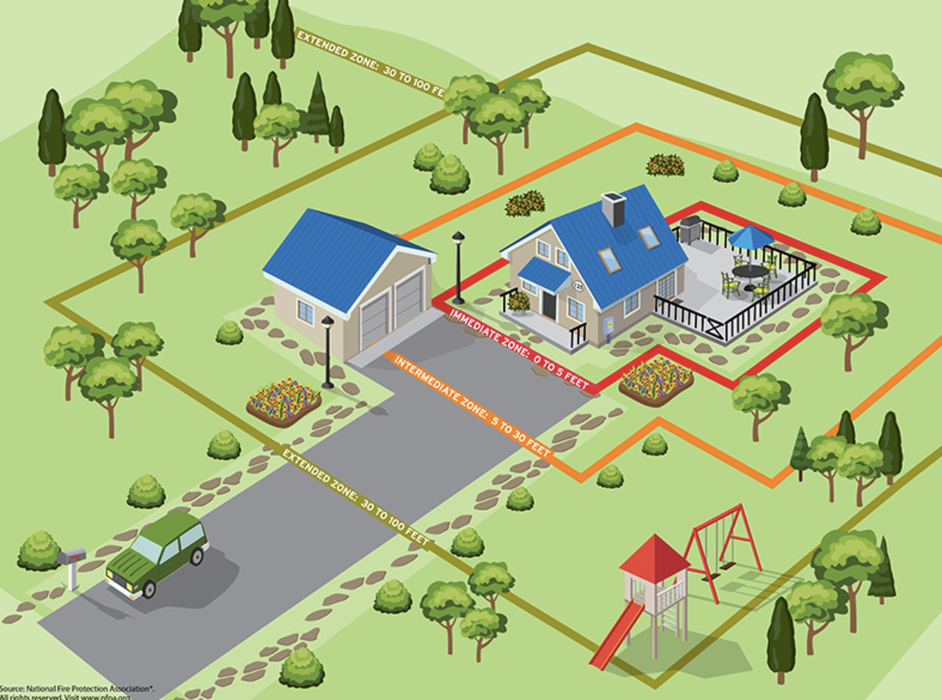
It is critical to work In the area immediate to the house and other structures to reduce fire risk from radiant heat and flying embers. Simple things like clearing roofs and gutters of leaves and needles, screening exterior vents, repairing windows, and removing anything away from structures and below decks such as flammable plants, leaves, mulch and firewood.
Plants are given flammability ratings (low, medium and high) based on various characteristics such as moisture content, sap or resin content, density of leaves and overall structure. Fire Resistant Landscaping in North Carolina is a great publication and place to begin learning how to assess and develop a fire resistant landscape. Also check out the NC Extension Gardener Plant Toolbox. This is a searchable database contains detailed descriptions (including their flammability rating) and photographs of over 4,000 plants that grow in and around North Carolina. There is a Find a Plant feature that allows you to select plants for various attributes and traits. One search, Resistant to Challenges, provides a list of plants with low flammability rating. Be sure to select Mountains for the NC Region!
Consider taking the Individual Homeowner Risk Rating to determine if your house is at risk. You will be amazed at the criteria and steps that can be taken to reduce fire risk and make your home and landscape fire-resistant. Additionally, there are 3 areas immediate to the house and further out, known as Home Ignition Zones. Using good plants choices, spacing and maintenance practices these spaces become defensible spaces, providing more opportunity to protect your home from fire. Preparing Home for Wildfire is one publication that describes these zones in more detail. Do you live in a community or development? Perhaps enough interest could be created to become a Firewise community.
Even if it seems overwhelming or something you don't think is necessary here in the western North Carolina, any small step can make a big difference down the road.