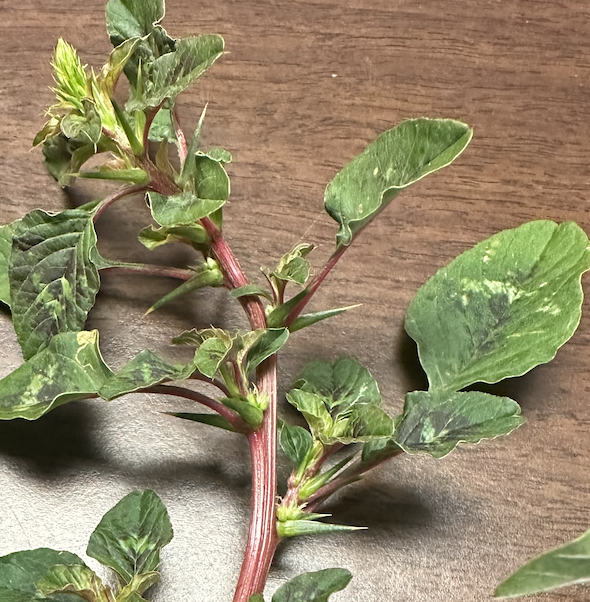
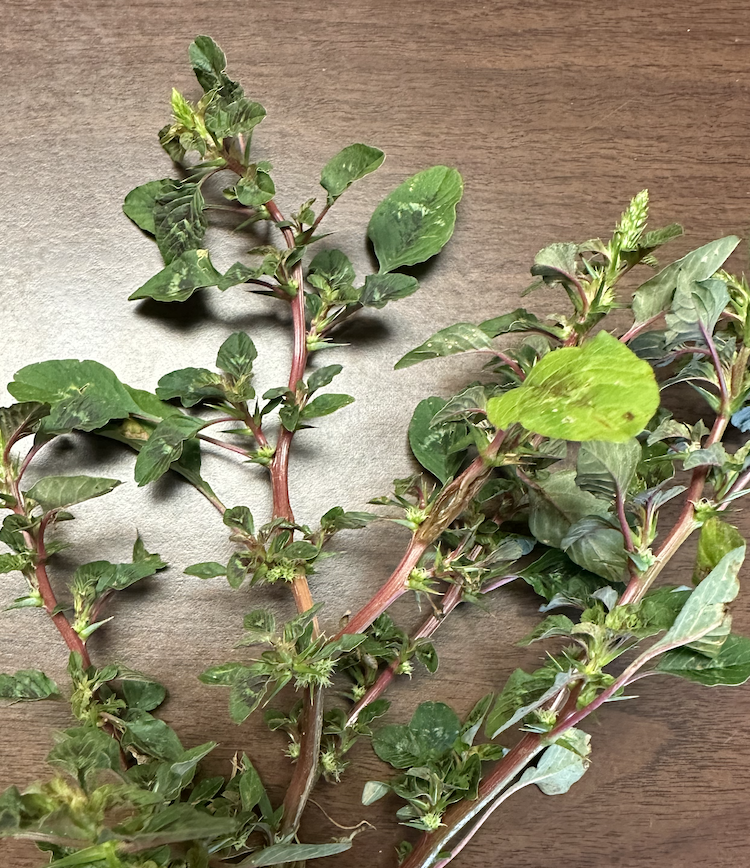
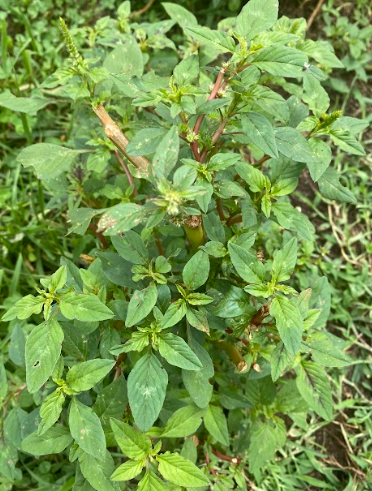
Spiny Amaranth, commonly called spiny pigweed, can grow up to 5 ft tall, leaves and stems may have a reddish tint, and have two sharp spines at each node. A heavy stand of spiny pigweed is a strong indicator of needing to revisit your stocking rate, grazing plan, and soil fertility management plan.
Because of its growth pattern and lack of palatability, spiny pigweed is picked over when animals graze and is left to outcompete more desirable forages. It is found more often in pastures that are overgrazed because it has more space to grow and less competition.
Pigweed is considered potentially dangerous to livestock because it is associated with nitrate accumulation. Nitrate accumulation is more likely in situations of plant growth stress- like droughts or heavy fertility. The risk of consumption is much lower if they have other things to graze, as they will usually choose to not eat something spiny and unpalatable. If they are left with less to graze, they may be pressured into eating enough pigweed to be of concern, which can lead to death.
Mowing can help reduce the number of seeds produced that year, but it has been found that it is necessary to fully maintain mowing if you start. This means you'll need to mow multiple times and keep the plants short, stressed, and not going to seed. Scout your pastures and catch these weeds before they go to seed!
Hand removal is possible in smaller pastures and populations. If the plants have already gone to seed, be sure to bag up the plants you are removing so the seeds aren’t left behind in the field or spread further as you’re leaving. A good pair of gloves and a spade will help with hand removal.
Chemical control can be effective with proper timing, as it is much easier to control a smaller, more tender plant than a larger one. Research trials have found that multiple herbicide applications are needed to provide longer term control of Spiny Amaranth. Scout your pastures and find them before they get too tall and strong! Read more here.
Seeing a dense stand of spiny pigweed in your pastures should begin the thought process of what changes you might need to consider. Ask yourself these questions to start:- Have you taken a soil sample in the last three years?
- If you have taken a soil sample recently, did you apply lime and fertilizer per those recommendations?
- What measures do you take to ensure that your pasture is not overgrazed?
- What is your stocking rate? (# of animals per acre)
- Do you rotate pastures?
- How short is your grass when you rotate?
The best thing to do is to use a multi prong approach- scout your pastures early and find the plants young! Then consider mowing where possible to maintain it being mowed, using chemical control where stands are dense, hand remove where feasible, re-evaluate grazing and fertility plans, and keep scouting your pastures!