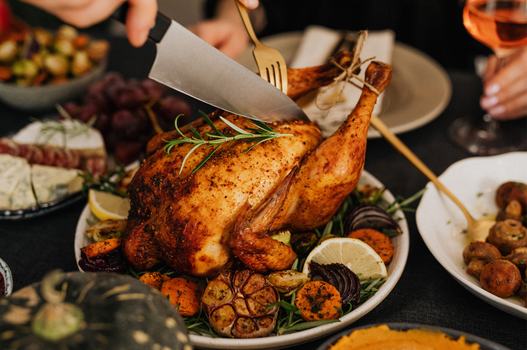
As the holiday season approaches, it’s important to take steps to ensure those who visit our homes receive safely handled and prepared food. Whether you're preparing a Thanksgiving turkey, making a dish for a holiday gathering, or storing leftover food, following a few simple food-safety practices can help protect your family and friends from foodborne illnesses.
- Cleaning
- Make sure everything is cleaned thoroughly
- Using warm water and soap, make sure the counters and cooking utensils are cleaned before and after use. Especially those utensils that have been sitting in your drawers for a long time.
- Wash your hands with warm water and soap for at least 20 seconds before preparing food, after handling food, and when switching between tasks.
- Rinse all produce (fruits and vegetables) thoroughly with cool running water.
- Do not rinse raw meat (beef, pork, poultry, etc.) Rinsing raw meat makes it more likely that bacteria will spread, potentially increasing the risk of foodborne illness. Cooking to the recommended minimum internal temperature will ensure that any bacteria or other food borne microorganism will be killed.
- Make sure everything is cleaned thoroughly
- Preparation
- Prevent cross-contamination of foods by keeping foods separated from each other during the preparation and cooking process.
- Make sure to use separate cutting boards for different food items
- One for produce
- One for raw meats
- If you are unable to use different cutting boards, ensure that you thoroughly wash and sanitize cutting boards when switching between raw meats and other food items.
- Cooking
- Ensure you cook all foods to their recommended minimum internal temperature to help kill harmful bacteria and prevent food poisoning.
- Poultry (chicken, turkey, etc.) should be cooked to a minimum internal temperature of 165°F.
- Ground meats should be cooked to a minimum internal temperature of 160°F.
- Fish and shellfish should be cooked to a minimum internal temperature of 145°F.
- Whole cuts of meat (beef, pork, lamb, steak, roasts, and chops) should be cooked to a minimum internal temperature of 145°F.
- Casseroles and leftovers should be cooked to a minimum internal temperature of 165°F.
- Use a food thermometer to ensure internal temperatures reach the minimum required temperature
- Ensure you cook all foods to their recommended minimum internal temperature to help kill harmful bacteria and prevent food poisoning.
- Cooling Foods
- When cooling leftovers or other foods, make sure to cool them within the time frame allotted for food safety
- Refrigerate all leftovers within two hours to prevent bacterial growth.
- Divide larger portions of food into smaller portions to help food cool quicker.
- Keep your refrigerator at 40°F or lower.
- Use your refrigerated leftovers within three to four days or freeze them for longer storage.
- When cooling leftovers or other foods, make sure to cool them within the time frame allotted for food safety
Watch this helpful video from the FDA on the four food safety steps (clean, separate, cook, and chill).
Take these simple food-safety steps this holiday season to keep you and your community safe!
Resources
- U.S. Food & Drug Administration. Holiday Food Safety. Fda.gov. Accessed October 26, 2026.
- U.S. Food & Drug Administration. Food Safety Tips for Healthy Holidays. Fda.gov. Accessed October 26, 2026.
- North Carolina Department of Health and Human Services. Food Safety Tips to Ensure a Healthy Holiday Gathering. Ncdhhs.gov. December 18, 2025. Accessed October 26, 2026.
- USDA Food Safety and Inspection Service U.S. Department Agriculture Safe Minimum Internal Temperature.